Press
The future of hospitality isn’t less human. It is more.
7th April 2026

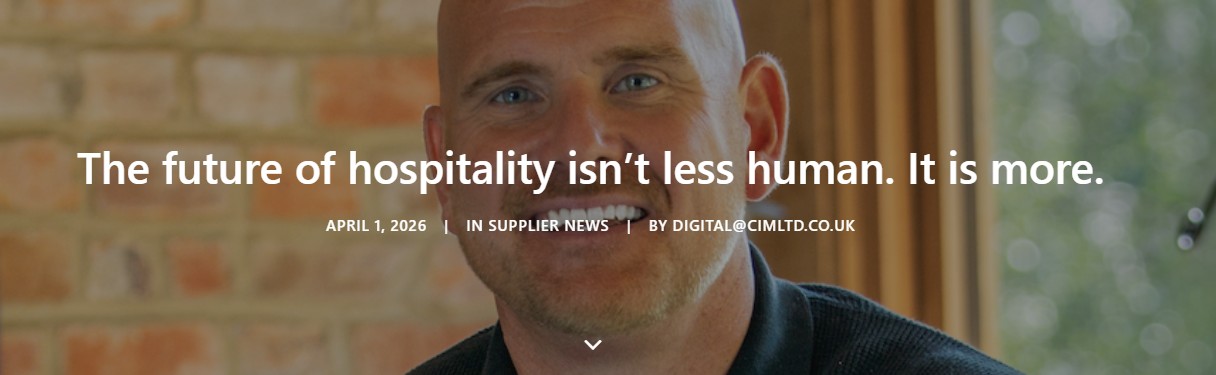

Hospitality has always been built on one simple idea: people looking after people. That hasn’t changed, but everything around it has – by Alastair Winsey, Founder, AIVA Revolution
Today’s guest doesn’t just compare your venue to the one down the road. They compare it to the best digital experience they’ve had anywhere. Instant replies, seamless booking and personalisation without effort.
At the same time, operators are dealing with a very different reality. Rising costs, ongoing labour challenges, increasing complexity across bookings, communications and service delivery.
The pressure is coming from both sides.
And this is where many conversations around AI and robotics start to drift in the wrong direction. There’s a fear that introducing technology somehow removes the human element from hospitality.
In reality, the opposite is happening. The venues that are adopting AI well are not becoming less human, they are becoming more focused on what actually matters.
The real issue in hospitality today isn’t a lack of effort, it’s where that effort is being spent. The Hidden Cost of “Busy Work.” Across hotels, restaurants and venues, teams are still spending a significant amount of time on repetitive, low-value tasks: responding to the same enquiries again and again, chasing confirmations, manually managing bookings across multiple systems and answering questions that already exist somewhere on a website or document.
What makes this worse is the fragmentation of communication. Guests are no longer just emailing.
They are reaching out across Instagram, Facebook, Whatsapp, SMS, website chat, email and OTA’s and directories.
Each channel creates another thread, another message and another place where something can be missed. This work is necessary, but it doesn’t create memorable experiences. It creates noise. And in a margin-sensitive industry, that noise is expensive. It drives up labour costs, slows response times and ultimately leads to missed revenue.
AI changes this dynamic by removing the need for teams to sit in the middle of these repetitive workflows. When guest enquiries can be handled instantly, 24/7, across all channels, something important happens: time is given back to the team and cost is taken out of the system at the same time.
One of the biggest shifts happening in hospitality is where the guest experience begins. It no longer starts when a guest walks through the door. It starts the moment they make an enquiry.
If that enquiry is answered instantly, clearly and in a way that feels helpful and on-brand, the experience has already begun positively. If it takes hours, or days, or gets lost across multiple platforms, the experience has already started to break down.
AI allows businesses to meet guests at that first moment of intent, consistently. Not instead of people, but before people are needed.
The same thinking applies to robotics. Guests don’t resist technology, they resist poor experiences.
We’re already seeing that over 75% of customers are comfortable interacting with technology, as long as it adds value and feels relevant.
Robotics, when used well, can create consistency in service delivery, operational support during peak periods and unique and memorable touchpoints.
The key is intent. Technology should never replace hospitality, t should support it. A robot delivering a dish is not the experience. The experience is how the guest feels while they are there.
The real opportunity is around focus and margin: what AI and automation really unlock is focus. When repetitive tasks are handled intelligently teams spend more time with guests, service becomes more attentive, operations become calmer and decision-making becomes clearer.
Instead of adding more people to manage complexity, businesses reduce complexity itself. This is where the commercial impact becomes clear. Faster, more consistent responses lead to higher enquiry conversion, fewer missed opportunities, reduced reliance on manual admin and improved staff efficiency.
In practical terms, this means lower operational cost, higher revenue capture and stronger margins.
In a competitive landscape, the venues that respond first and respond well, are the ones that win.
The opportunity doesn’t stop at booking. When guest communication is connected across channels, businesses begin to build a much clearer picture of their customers preferences, behaviour, sentiment and previous interactions. This creates the foundation for something hospitality has always relied on, but rarely systemised: loyalty.
Through intelligent follow-up and ongoing communication, businesses can stay relevant to guests long after the initial enquiry. Not generic marketing, but personalised, timely communication based on real interest and behaviour. This is where repeat bookings, upsells and long-term value are built.
What makes this moment in hospitality different is that it is one of the few times where the customer wins, the business wins and the team wins. Guests receive faster, more relevant experiences, businesses operate more efficiently, reduce costs and convert more demand. Teams are freed from repetitive admin and can focus on delivering great service. How often do all three of those align at the same time? Almost never.
For operators looking to move forward, the first step is not to adopt more technology. It’s to rethink where time and pressure are sitting in the business. Ask where are we repeating the same work, where are we slow to respond, here are we losing enquiries and where is fragmentation creating inefficiency?
Then start small. Focus on guest communication, enquiry handling and booking flow. Then follow-up and nurture, because that’s where the biggest gains can be made quickly.
The future of hospitality will not be defined by how much technology is used, but by how intelligently it is applied to remove friction, reduce cost and create more meaningful human experiences at every stage of the guest journey.
Copyright 2026 AIVA Revolution Ltd.